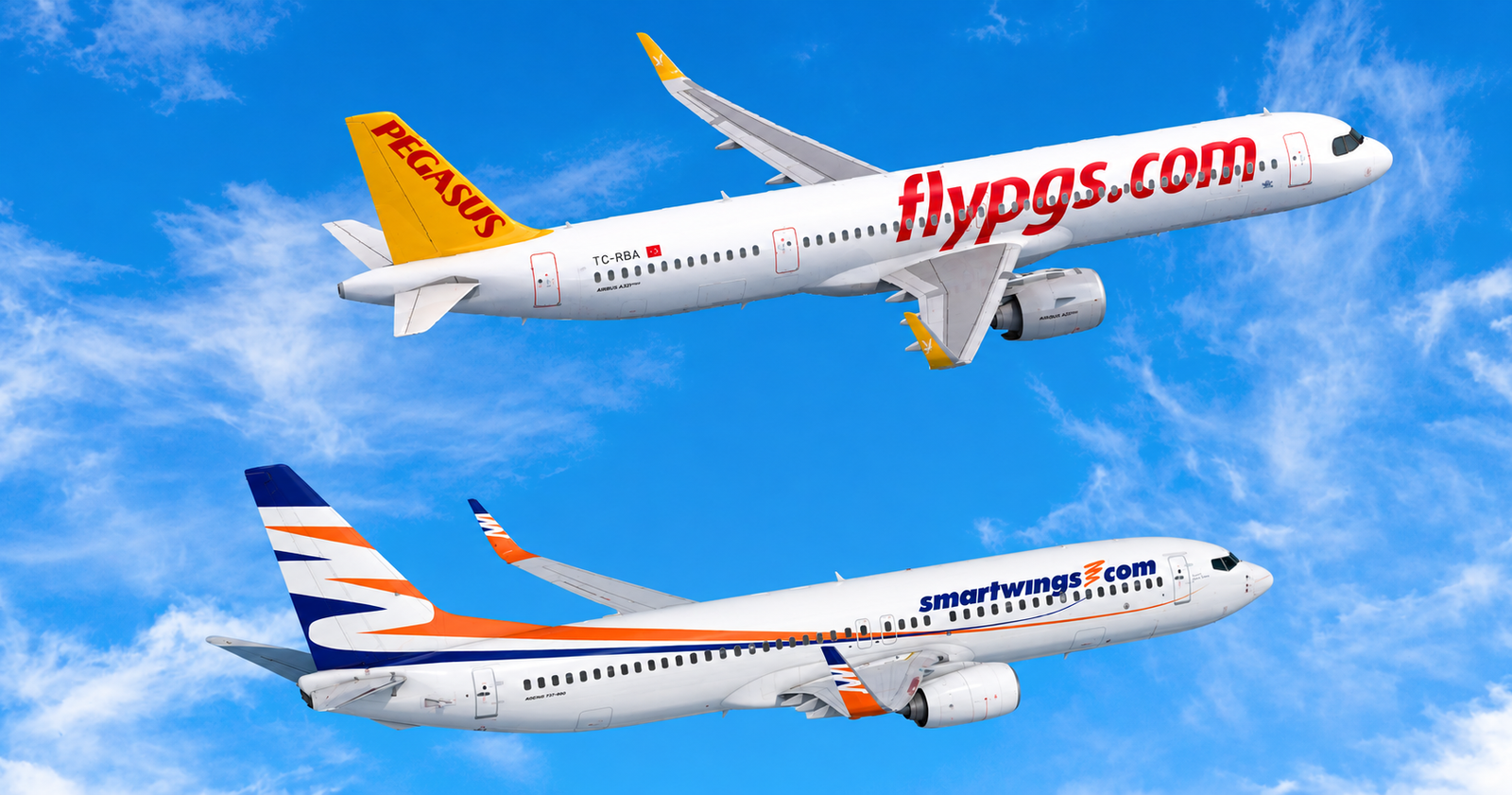
Pegasus’s Move into Prague and a New Era in European Skies
When we talk about innovation in aviation, we often think of next-generation aircraft, biometric systems or artificial intelligence. But the sector’s transformation is not limited to technology. Opening new markets, bringing different business models together and building stronger networks for passengers are also important forms of innovation.
Pegasus Airlines’ acquisition of the management control of Czech Airlines and the Smartwings Group for €142.29 million on 1 October 2026 is a striking example. More than a straightforward acquisition, the Prague move points to a new approach to capacity, connectivity and growth across Europe. The transaction received conditional approval from the Czech Competition Authority, which wanted to prevent a monopoly on the Prague–Antalya route. Under the decision, Pegasus must transfer some of its Antalya summer-season slots to competing carriers. Even so, the group’s fleet is expected to exceed 175 aircraft, while an order for 140 additional aircraft provides considerable room for future growth.
From a Single Airline to a Multibrand Aviation Group
Smartwings’ strong relationships with tour operators in the region and its long-standing experience in leisure travel could create new opportunities for Türkiye’s main tourism destinations. The combination of Pegasus’ international network with Smartwings’ established presence in Central and Eastern Europe also creates room for broader geographic integration and two-way economic value. The group holds four Air Operator Certificates (AOCs), covering Czechia, Slovakia, Poland and Hungary.
This structure could take Pegasus beyond the profile of a single airline and turn it into a multibrand international aviation group operating across Europe. The innovation here is not only about fleet size. It lies in bringing different brands, licences, markets and passenger experiences together within one strategic structure.
Growth Through Capacity and Connectivity
Strategic integration is not the only way airlines pursue growth. In recent years, carriers have also explored opportunities created by aircraft-supply constraints and limited capacity. Turkish Airlines, for example, previously held discussions about acquiring certain Airbus A320neo and A321neo aircraft from the fleet of US-based low-cost carrier Spirit Airlines through leasing companies. The plan was never finalised and was later put on hold.
These examples show that innovation in aviation can also mean using existing resources in a different network or business model. By creating new travel corridors and improving international connectivity, capacity initiatives of this kind can contribute to Türkiye’s tourism economy.
Prague as a Gateway to Türkiye’s Tourism Network
Alongside Pegasus’ existing Prague services from Sabiha Gökçen Airport (SAW), the group’s slot position could support new routes from Istanbul Airport (IST). The details of any future network plan will depend on regulatory and commercial decisions, but the transaction could increase direct flight frequencies between Central and Eastern Europe and Türkiye’s main tourism destinations.
Pegasus’ Prague move is therefore more than a change in ownership. It could become an important stage in the carrier’s transformation into a broader European aviation group, with the potential to reshape route connectivity, leisure travel flows and Türkiye’s access to the Central European market.
References
Dallı, D. (2026, October 1). Pegasus’un 142 milyon euroluk Çekya satın almasında dikkat çeken şart, Prag–Antalya slotları rakibe açılacak. Patronlar Dünyası. https://www.patronlardunyasi.com/
Erdağı, O. (2026, October 3). Oktay Erdağı yazdı: Pegasus’un Avrupa’ya uzanan büyük hamlesi. AirportHaber.
Pegasus Airlines. (2026, October 1). Pegasus, Çekya Hava Yolları ve Smartwings Grubu’nun satın alımını tamamladı. Pegasus Airlines Press Room.
Pegasus Hava Taşımacılığı A.Ş. (2025, December). Smartwings – Genel bilgiler [Investor presentation]. Public Disclosure Platform (KAP).